I wasted a whole bag of light-roast Ethiopian beans on iced lattes last July. Every glass tasted like cold milk with a faint tea bag waved over it. I blamed my grinder. I blamed the ice. My barista friend took one sip and laughed.
"Your roast is losing a fight with the milk," she said. She was right. The best roast level for iced latte is not light. It is not the blackest, oiliest bean on the shelf either. It sits in the middle, tilted toward dark. The reason is simple chemistry, not coffee snobbery.
The Short Answer Most Guides Bury

Medium-dark to dark roast wins for iced lattes. Look for tasting notes of chocolate, caramel, toasted nuts, or molasses . Those flavors punch through cold milk. Floral, citrus, and berry notes do not. They vanish.
Read Also: How to Stop Iced Coffee From Getting Watery: 7 Tips
Milk fat coats your tongue. It mutes delicate aromatics. Ice dilutes the coffee as it melts. A light roast has to fight both battles at once. It usually loses both. A darker roast starts with more body and more developed sweetness. It survives the milk. It survives the melt.
Starbucks knows this. Their Iced Coffee Blend is a medium roast built for cold drinks. Sweet citrus, caramel, designed to hold up over ice . Their Blonde Roast, despite the name, sits closer to medium than true light. That is not an accident.
Why Light Roast Falls Apart in Milk and Ice?
I tried to make light roast work for months. Here is what I learned.
Light roasts carry the bean's origin character. Jasmine. Bergamot. Stone fruit. Those notes shine in a pour-over. In an iced latte, they disappear behind milk fat and melting ice. The drink tastes thin. Watery. Like something is missing.
The technical reason: light roasts have less roasted sugar development. They have less body. When you add milk and ice, you dilute an already delicate flavor profile. There is nothing left to taste.
If you already bought light beans, do not throw them out. Adjust the recipe. Chill the espresso in the fridge instead of pouring it over ice. Use less milk. Skip the sweetener. It will still be a compromise, but it will be drinkable.
Why the Darkest Roast Is Not the Answer Either?
There is a ceiling. A French roast or Italian roast can taste ashy and burnt when milk hits it. The bitterness does not balance the milk's sweetness. It fights it.
You Must Also Like: What Is Flash Brew Coffee? The New Way to Drink Iced Coffee
Medium-dark is the sweet spot. It develops caramelization without crossing into char. Nespresso's Bianco Piccolo, designed for milk recipes, uses a split roast. Most of the blend is medium-dark.
A small portion is light. The result is roasted depth without losing sweetness . That is the balance you want.
When you shop, read the bag. Chocolate, caramel, nut. Buy it. Jasmine, bergamot, bright citrus. Leave it. Those are signals the roast is too light for milk and ice.
The Shot Matters as Much as the Bean
Roast level is the foundation. The espresso shot on top decides whether the drink works.
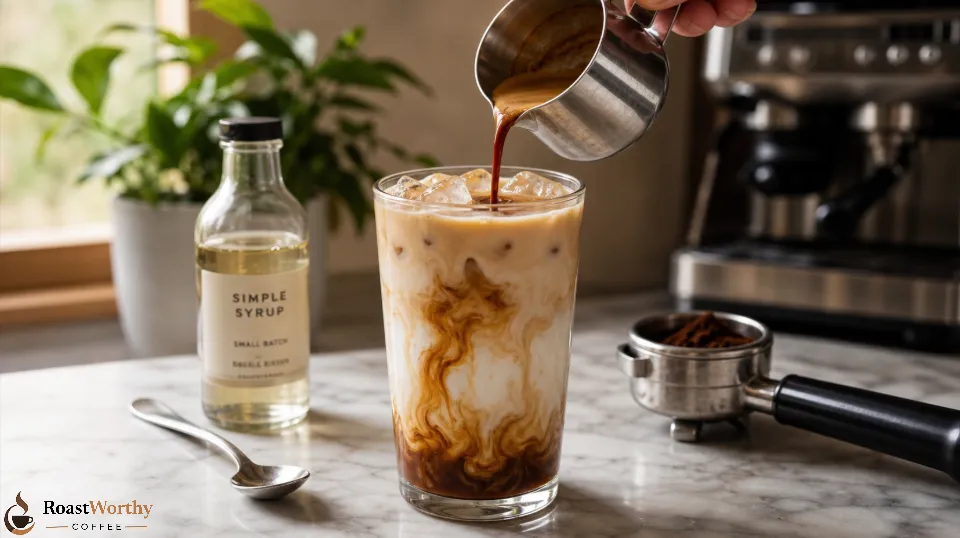
Pull a shorter shot for iced lattes. A 1:1.5 ratio works well. That means 18 grams of coffee in, 27 grams of espresso out. This gives you a concentrated, syrupy shot that holds flavor when milk and ice arrive.
A 1:2 or 1:2.5 shot is better for drinking straight. It gets lost in milk. Pull it shorter for iced drinks.
Taste the espresso before you build the drink. If it tastes harsh and bitter alone, it will taste harsh and bitter in the latte. Bitterness usually means over-extraction. Grind too fine. Water too hot. Shot too long. Fix that before you blame the beans.
The Bitter Iced Latte Problem (It Is Not Always the Roast)
People search for how to fix bitter French press coffee and end up reading about iced lattes. The problems overlap. Bitterness in coffee almost always means over-extraction. Coarser grind. Cooler water. Shorter brew time.
But iced lattes have a separate bitterness risk. Dark roasts carry more bitter compounds by nature . If you are sensitive to bitterness, medium-dark is safer than a very dark French roast. The darker the bean, the more bitter the cup, even with perfect extraction.
The Final Thoughts
I keep two bags of beans. A medium-dark espresso blend for milk drinks. A light single origin for black coffee and pour-over. I stopped trying to make one bag do everything.
For iced lattes, I pull a short shot. Whole milk if I have it. Large ice cubes, not crushed, because they melt slower. I taste the espresso before I build the drink. If it is not sweet and balanced on its own, no amount of milk will save it.
The best roast level for iced latte is the one that still tastes like coffee after the milk and ice do their damage. Medium-dark does that. Light roast does not. Very dark roast overdoes it. Pick the middle. Your iced latte will finally taste like coffee, not cold milk with a brown tint.
That bag of Ethiopian beans? I use it for pour-over now. Black. No milk. No ice. It is excellent. Some beans have a purpose. An iced latte is not one of them.