
I have been drinking specialty coffee for years. I thought I understood processing methods. Washed. Natural. Honey. Then I tried a carbonic maceration natural coffee. It was different. Fruity. Complex. Almost wine-like. I had to understand what was happening.
Here is what I learned. And it changed how I think about coffee.
What Is Carbonic Maceration?
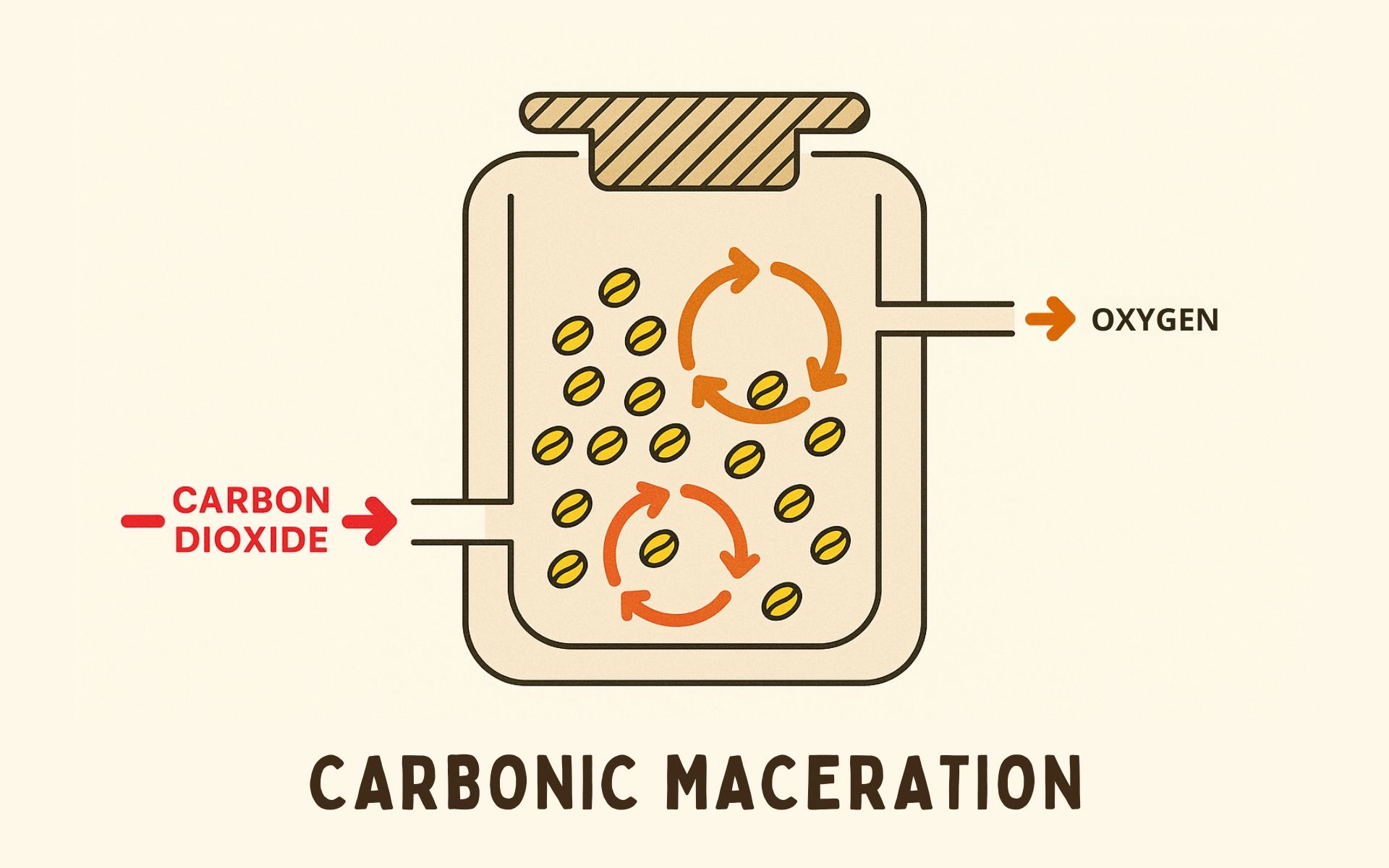
Carbonic maceration is a fermentation technique. It borrows from winemaking. It was developed in the Beaujolais region of France in the 1930s. The technique involves fermenting whole coffee cherries in a sealed tank flooded with carbon dioxide (CO₂). This creates an oxygen-free environment.
Read Also: The 12-Minute Transformation: What Really Happens When Coffee Beans Are Roasted?
The CO₂ pushes out oxygen. It encourages the cherries to break down. This happens through intracellular fermentation. Enzymes inside the cherry do the work. Not external yeasts or bacteria.
The coffee is left in this environment for a specific time. Usually 48 to 96 hours. Sometimes longer . After fermentation, the cherries are dried. They can be dried whole (natural process) or washed. The "natural" in carbonic maceration natural coffee means the cherries are dried whole after fermentation.
How It Works: The Process Step-by-Step
The process is controlled and precise. It is not guesswork. It requires equipment and monitoring.
Step 1: Harvest and Selection
Ripe coffee cherries are picked. They are sorted. Only the best cherries are used .
Step 2: Sealed Fermentation
The cherries are placed in plastic containers or tanks. The containers are sealed. Carbon dioxide is pumped in. It purges the oxygen . The tanks have one-way valves. This allows gas to escape during fermentation. It prevents new oxygen from entering .
Step 3: Fermentation
In this CO₂-rich environment, fermentation begins. It is intracellular. Enzymes within the cherry break down sugars. This creates unique flavor compounds. The process can last from 48 hours to over 120 hours. Time and temperature are controlled.
Step 4: Drying
After fermentation, the cherries are spread on drying beds. They are dried in the sun. This can take 8 to 16 days. The coffee is dried with the fruit still on the bean. This is the "natural" part. The bean absorbs fruity flavors from the fruit as it dries.
What Does Carbonic Maceration Natural Coffee Taste Like?

The flavor profile is distinctive. It is not subtle. It is intense and complex. Coffee processed this way often has notes of:
-
Berry compote and raspberry jam
-
Grapefruit and citrus
-
Semi-sweet chocolate
-
Floral aromas like rose
-
Wine-like or "boozy" notes
-
Dried fruit and raisin
One study found that carbonic maceration creates characteristic raspberry flavor notes. It also produces hints of rose water. The technique intensifies fruity aromatics. It also restrains acidity and astringency.
Carbonic Maceration vs. Traditional Natural Process
The difference is in the fermentation environment. Traditional natural processing involves open-air drying. Fermentation happens naturally. It is less controlled. Carbonic maceration is closed and controlled.
You Must Also Like: Starbucks French Roast Whole Bean: A Deep and Bold Coffee Experience
Traditional natural coffee has fruity notes. But they are more subtle. They can be described as "clean" or "classic." Carbonic maceration coffee is more intense. It can have "boozy" or "cooked fruit" flavors. There is also a risk of astringency and bitterness if the process goes wrong.
A study in East Lombok compared the two methods. Consumer preference tests showed that carbonic maceration coffee scored higher for aroma and taste . It was preferred over traditionally processed natural coffee.
Why Producers Are Using This Method?
Carbonic maceration offers benefits. It allows control over variables. Producers can target specific flavor outcomes. This creates value. Specialty coffee with unique flavors commands higher prices.
However, it requires investment. Producers need sealed tanks and CO₂ equipment. They need to understand the variables. They need to cup and test their experiments . There is a level of risk involved. The process can go wrong. If fermentation is not controlled, it can produce unpleasant flavors.
My Take on Carbonic Maceration Natural Coffee
Carbonic maceration natural coffee is not for everyone. If you like clean, classic coffee, this might be too intense. It is a flavor experience. It is experimental. It is also expensive.
But if you want to explore the outer edges of what coffee can taste like, try it. Look for it in specialty coffee shops. Read the tasting notes. Find something with raspberry or wine notes. That is a good entry point.
It is also important to understand the process. This helps you appreciate the work behind the cup. It is not mass-market coffee. It is a craft product. It is made by producers who are taking risks to create something different.